
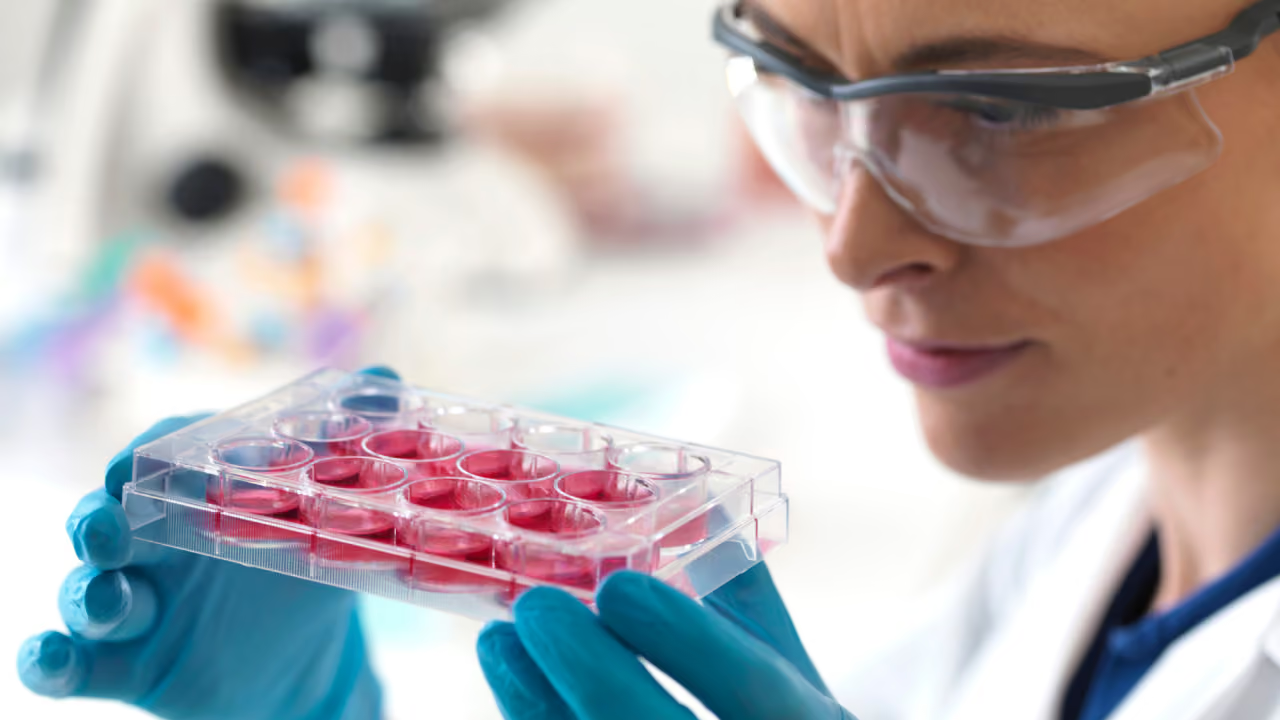
If you're researching autism treatment and have come across stem cells or exosomes, you've probably found a mix of promising research and confusing claims. Here's what these therapies actually are, how they're being used in autism treatment, and why the order you use them matters as much as the therapies themselves.
What are stem cells and what do they do in the body?
Stem cells are cells the body already produces. Their job is to repair tissue, regulate the immune system, and reduce inflammation. They're not foreign to the body. They're part of how the body maintains itself.
In clinical use for autism, the most studied type is mesenchymal stem cells, often sourced from umbilical cord tissue donated after healthy births. They're chosen because of their anti-inflammatory properties and because they're well tolerated by the immune system.
The current research points to these cells being most useful for children who have measurable neuroinflammation and immune dysregulation. That's a specific application. It's not a treatment that works the same way for every child on the spectrum.
What are exosomes and how do they work differently from stem cells?
Exosomes are not cells. They're tiny particles that cells naturally release to communicate with each other. They carry proteins and genetic signals that instruct other cells how to behave.
What makes exosomes particularly relevant in autism treatment is that they can cross the blood-brain barrier. Stem cells generally can't. So while stem cells work throughout the body, reducing inflammation and supporting immune function systemically, exosomes can deliver signals directly to the central nervous system.
For a child with ASD who has neuroinflammation, that distinction matters. The two therapies work through different mechanisms. Used together in the right sequence, they can address things that neither one fully reaches on its own.
Why does the preparation phase matter before starting these therapies?
Stem cells and exosomes are advanced therapies. They work best when the biological environment is ready to receive them. If a child's gut is chronically inflamed, if mitochondrial function is poor, if food sensitivities are driving ongoing immune activation every day, introducing cellular therapies into that environment produces limited results.
Think of it like renovating a house with a cracked foundation. Starting with the interior finishes before fixing the foundation doesn't make sense. The underlying problems have to come first.
Before stem cells and exosomes can do what they're designed to do, the child's biology needs to be prepared. That means addressing gut health, reducing neuroinflammation, correcting nutrient deficiencies, and supporting mitochondrial and metabolic function. Skipping this phase doesn't speed up treatment. It limits what the advanced therapies can achieve.
What does the preparation phase actually look like in practice?
A thorough preparation phase starts with testing. Gut microbiome analysis, inflammatory markers, mitochondrial function, methylation capacity, and food sensitivities all need to be assessed before a protocol is built. What the testing reveals shapes the first phase of treatment.
At Calm Protocols, we don't introduce stem cells or exosomes until that foundational work is done and the repeat testing shows the biology is responding. The protocol is built from what we find in each child's results, not from a fixed template.
What should you ask any clinic before committing to these therapies?
If you're evaluating any clinic that offers stem cell or exosome therapy, the most useful question to ask is a simple one: what happens before the stem cells?
The answer tells you a lot about whether the program is built around your child's biology or around a treatment schedule.
If you'd like to understand what the preparation phase would look like for your child specifically, a discovery call is a good place to start. Book one here.