If you've heard about hyperbaric oxygen therapy for autism and wondered whether there's any real science behind it, the answer is yes, though the evidence is still developing and results vary between children.
What is hyperbaric oxygen therapy?
HBOT involves breathing pure oxygen inside a pressurized chamber. The increased pressure allows the lungs to take in significantly more oxygen than normal, which then dissolves into the blood and reaches tissues throughout the body, including the brain.
At sea level, oxygen is carried almost entirely by red blood cells. Under pressure, oxygen also dissolves directly into the blood plasma, cerebrospinal fluid, and other body fluids. This allows it to reach areas with reduced circulation that red blood cells may not reach as effectively.
Why would increased oxygen delivery matter for children with autism?
Several biological processes that have been identified in autism research are directly affected by oxygen availability.
Neuroinflammation, the low-grade brain inflammation found in some children with autism, may be reduced in environments with higher oxygen levels. Oxygen plays a key role in regulating the immune signals that drive this type of inflammation.
Mitochondrial function is another area of relevance. Mitochondria are the energy-producing structures inside cells. Research has found that mitochondrial dysfunction is more common in children with autism than in the general population. Adequate oxygen is essential for mitochondrial energy production, and some researchers believe HBOT may help support this process.
Cerebral hypoperfusion, which means reduced blood flow to certain areas of the brain, has also been documented in some children with autism using brain imaging studies. Increased oxygen delivery may help compensate for areas receiving less than optimal blood flow.
What does the research on hyperbaric oxygen therapy in autism show?
The most significant clinical trial to date was published in 2009 in BMC Pediatrics by Rossignol and colleagues. It was a randomized controlled trial, the gold standard in clinical research, involving 62 children with autism. Children who received HBOT at 1.3 atmospheres with 24 percent oxygen showed significant improvements in overall functioning, receptive language, social interaction, eye contact, and sensory and cognitive awareness compared to the control group.
A 2012 review published in Medical Gas Research analyzed multiple studies and found consistent reports of improvements in behavior, communication, and social responsiveness following HBOT protocols in children with autism.
What does a typical HBOT protocol look like?
Protocols vary between providers, but clinical research in autism has most commonly used pressures between 1.3 and 1.5 atmospheres with oxygen concentrations between 24 and 100 percent.
Session length is typically 60 minutes. Some children receive multiple courses over time depending on their response.
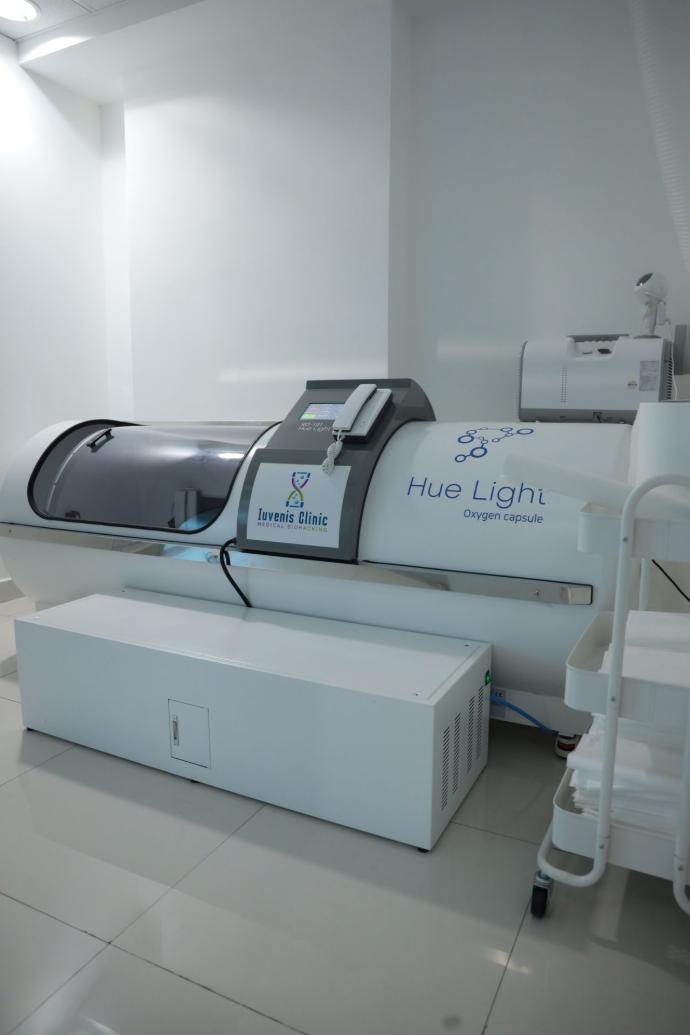
The setting matters. Hard-shell hyperbaric chambers used in clinical settings allow for precise pressure and oxygen concentration control. Soft-shell home units operate at lower pressures and are not equivalent to clinical HBOT in terms of the research evidence behind them.
Is HBOT safe for children?
When administered by trained medical professionals in a properly equipped clinical setting, HBOT has a well-established safety profile.
The most commonly reported side effects are mild and temporary, including ear discomfort from the pressure change, similar to what you experience on a plane. This is managed by teaching children to equalize pressure, much like yawning or swallowing.
Oxygen toxicity and other serious adverse events are extremely rare at the pressures and durations used in autism protocols. Contraindications include certain ear and lung conditions, and a medical evaluation should always precede treatment.
How does HBOT fit into a broader autism treatment approach?
HBOT is not a standalone treatment and works best as part of a comprehensive, personalized plan.
At Autism Calm Protocols, HBOT is considered alongside functional medicine evaluation, gut health support, nutritional optimization, and in some cases mesenchymal stem cell therapy. The combination of anti-inflammatory approaches may produce more meaningful outcomes than any single therapy used in isolation.
Every child's biological profile is different. The decision to include HBOT should be based on a thorough clinical evaluation, not on a general assumption that it will help every child equally.
A Practical question to bing to your next appointment
Ask: "Based on my child's current health profile and test results, do you think HBOT could be a relevant complementary approach, and what pressure and protocol would you recommend?"
Ready to learn more?
If you'd like to understand whether HBOT may be appropriate for your child as part of a personalized functional medicine plan, we're here to help. Book a complimentary discovery call with the Calm Protocols team to discuss your child's history, answer your questions, and explore the right next steps for your family.
You might also find these articles helpful:
What Is Neuroinflammation and Why Does It Matter in Autism?
Can Stem Cells Help Children With Autism?
Are Stem Cells Safe for Children With Autism?
What Lab Tests Should Parents Ask for When It Comes to Autism?
References:
1. Rossignol et al. (2009), Hyperbaric treatment for children with autism: a multicenter, randomized, double-blind, controlled trial; BMC Pediatrics (2009); Daniel A. Rossignol et al.